
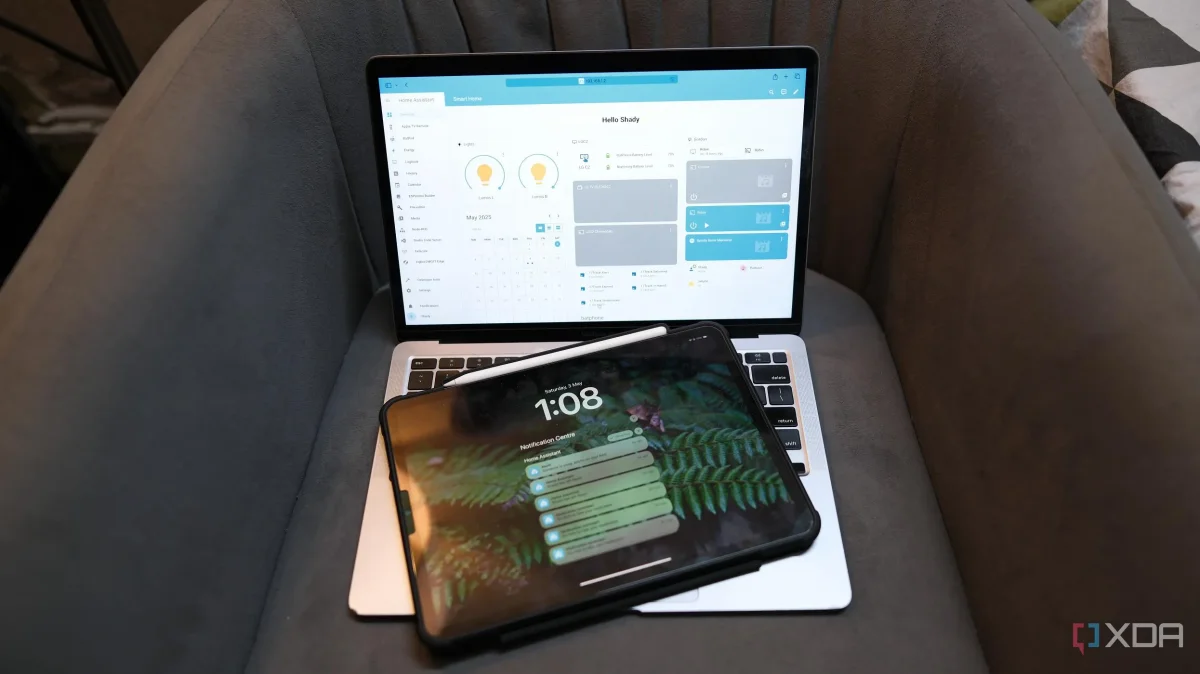
A local-first approach to smart home technology has shown significant benefits, such as enhanced responsiveness and reliability in device automation. The shift away from cloud dependency has led to a system where devices operate without needing external servers or mandatory accounts. Users report that automations are now more consistent and troubleshooting has been simplified.
The transition began with the selection of a suitable controller, specifically Home Assistant, which operates independently of cloud services. Initial experiments were conducted using a Raspberry Pi before moving to a more robust setup on a mini PC with Proxmox. This change resulted in greater reliability and improved performance across various integrations.
By maintaining core functionalities within the home network, the smart home system continues to operate even during internet outages. Essential tasks such as data transmission from sensors and the execution of automations remain uninterrupted. Although internet connectivity is beneficial for updates and remote access, the local setup ensures that basic operations are preserved.