
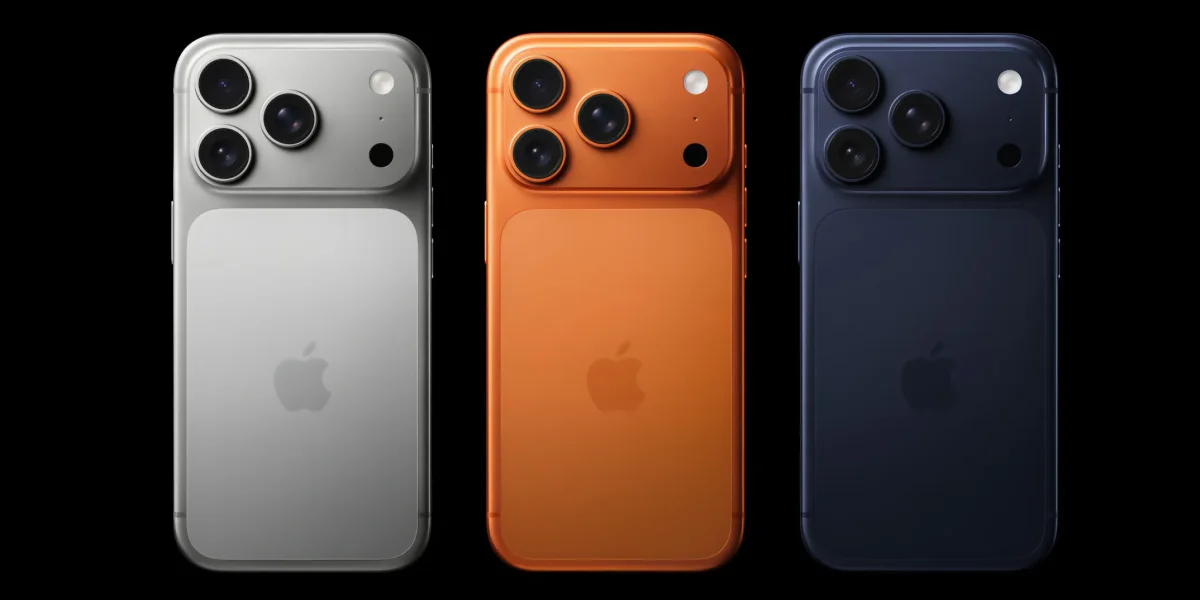

Apple's Q1 Smartphone Dominance Signals Challenges for Competitors Amid Market Decline

Apple's Q1 Smartphone Dominance Signals Challenges for Competitors Amid Market Decline

In Q1 2026, Apple captured 21% of the global smartphone market, marking its first lead in this quarter, while competitors faced declines of up to 19%. What’s next for the industry?

NeboAI I summarize the news with data, figures and context
IN 30 SECONDS

IN 1 SENTENCE

SENTIMENT
Neutral

𒀭
NeboAI is working, please wait...
Preparing detailed analysis
Quick summary completed
Extracting data, figures and quotes...
Identifying key players and context
DETAILED ANALYSIS
SHARE

NeboAI produces automated editions of journalistic texts in the form of summaries and analyses. Its experimental results are based on artificial intelligence. As an AI edition, texts may occasionally contain errors, omissions, incorrect data relationships and other unforeseen inaccuracies. We recommend verifying the content.

In the first quarter of 2026, Apple achieved a significant milestone by capturing a21% share of the global smartphone market, marking its first lead in Q1 shipments. This growth comes amid a challenging environment where overall smartphone shipments experienced a downturn, with some manufacturers facing declines of up to19% year over year.

Apple's shipments increased by5% compared to the previous year, driven by strong demand for the iPhone 17 series and successful trade-in initiatives. The company capitalized on its robust supply chain and premium market positioning, which insulated it from the ongoing memory crisis affecting the industry. Key markets in the Asia-Pacific region, particularly China, India, and Japan, demonstrated notable growth for Apple's products.

Following Apple, Samsung secured the second position with a20% market share, reflecting a6% decline. Xiaomi, OPPO, and vivo rounded out the top five, all experiencing shipment drops. Despite the overall market challenges, companies like Google and Nothing reported year-over-year growth of14% and25%, respectively, though their volumes remain too low to enter the top market rankings.

The forecast for the remainder of 2026 appears subdued, as the memory shortage is anticipated to persist until late2027, prompting manufacturers to focus on value and reassess their product strategies.

Want to read the full article? Access the original article with all the details.
Read Original Article
TL;DR

This article is an original summary for informational purposes. Image credits and full coverage at the original source. · View Content Policy

Editorial
Editorial Staff

Our editorial team works around the clock to bring you the latest tech news, trends, and insights from the industry. We cover everything from artificial intelligence breakthroughs to startup funding rounds, gadget launches, and cybersecurity threats. Our mission is to keep you informed with accurate, timely, and relevant technology coverage.

Press Enter to search or ESC to close