
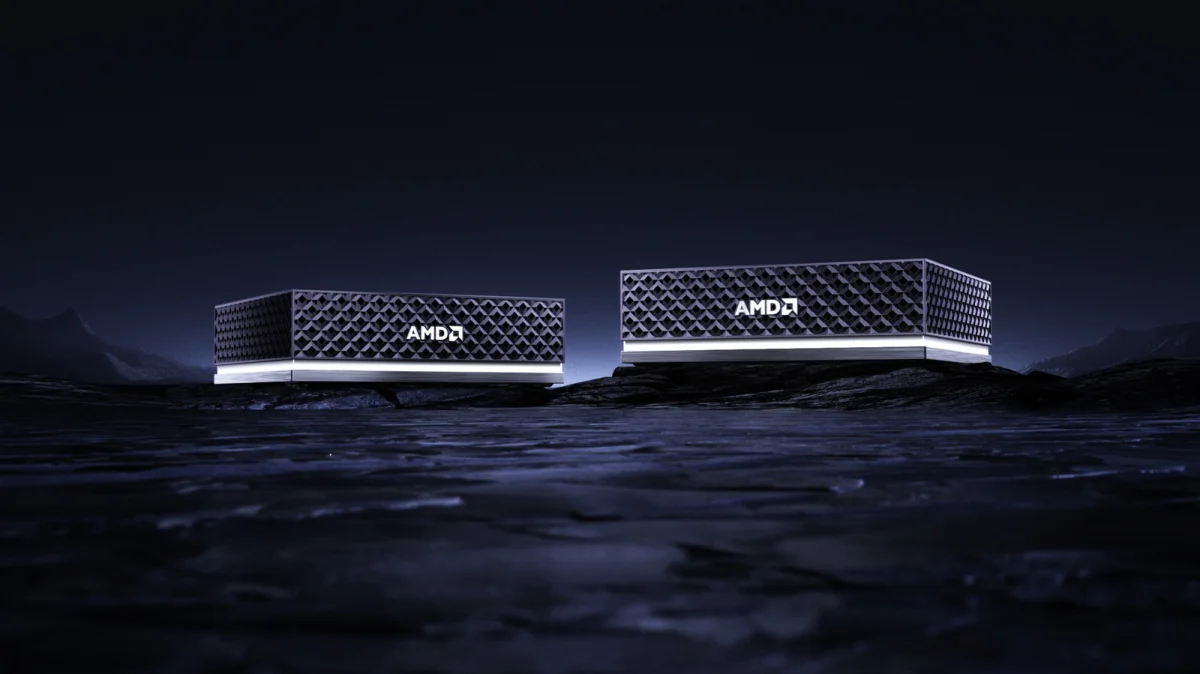

AMD's $3,999 Ryzen AI Halo PC set to challenge high-end gaming market with new chips

AMD's $3,999 Ryzen AI Halo PC set to challenge high-end gaming market with new chips

AMD's Ryzen AI Halo PC, priced at $3,999, targets developers paying high AI fees, potentially saving them money within months. Preorders begin in June.

NeboAI I summarize the news with data, figures and context
IN 30 SECONDS

IN 1 SENTENCE

SENTIMENT
Neutral

𒀭
NeboAI is working, please wait...
Preparing detailed analysis
Quick summary completed
Extracting data, figures and quotes...
Identifying key players and context
DETAILED ANALYSIS
SHARE

NeboAI produces automated editions of journalistic texts in the form of summaries and analyses. Its experimental results are based on artificial intelligence. As an AI edition, texts may occasionally contain errors, omissions, incorrect data relationships and other unforeseen inaccuracies. We recommend verifying the content.

AMD has introduced its Ryzen AI Halo PC, which is priced at $3,999 and set to begin preorders in June. This compact system, aimed at AI processing, challenges NVIDIA's offerings by providing a local alternative to cloud-based AI solutions. The Ryzen AI Max 400 chips are expected to be available in the third quarter of 2026.

Featuring a 50 TOPS neural processing unit (NPU) and a Radeon GPU with 40 compute units, the Halo PC is designed for developers who require substantial computational power. In comparison, NVIDIA's DGX Spark AI PC, which retails at $4,699, relies solely on NVIDIA's Blackwell GPU and only operates on Linux.

For users utilizing high volumes of AI tokens, AMD claims that the Halo PC could prove to be a cost-effective solution. Developers spending approximately $773 monthly for 6 million daily AI tokens could recoup their investment in about six months. More intensive users, paying around $2,253 per month for 18 million tokens, might break even in just three months.

The forthcoming Ryzen AI Max 400 chips, led by the AI Max+ Pro 495, will offer enhanced specifications, including a 16-core design and a boost speed of 5.2GHz, along with the capability to support up to 192GB of unified memory.

Want to read the full article? Access the original article with all the details.
Read Original Article
TL;DR

This article is an original summary for informational purposes. Image credits and full coverage at the original source. · View Content Policy

Editorial
Editorial Staff

Our editorial team works around the clock to bring you the latest tech news, trends, and insights from the industry. We cover everything from artificial intelligence breakthroughs to startup funding rounds, gadget launches, and cybersecurity threats. Our mission is to keep you informed with accurate, timely, and relevant technology coverage.

Press Enter to search or ESC to close