

2026 Flagship Phones Set to Battle: Snapdragon 8 Elite Gen 5 Takes Lead Over Exynos 2600

2026 Flagship Phones Set to Battle: Snapdragon 8 Elite Gen 5 Takes Lead Over Exynos 2600

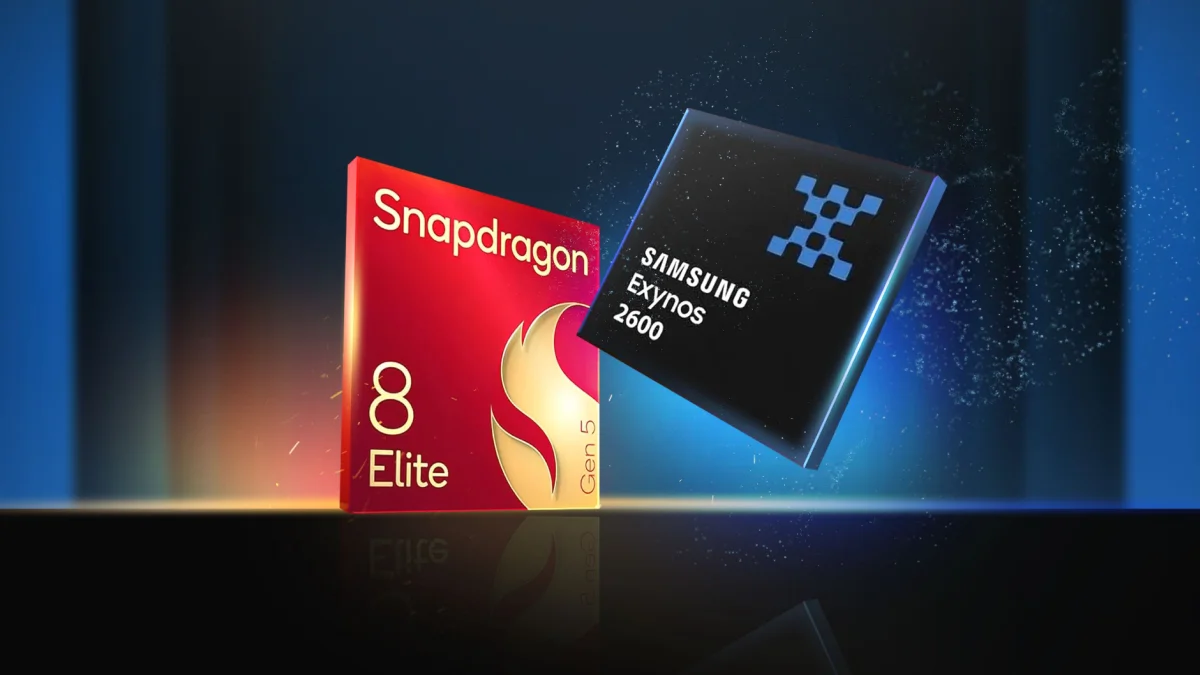
In 2026, Samsung's Galaxy S26 series will feature the groundbreaking Exynos 2600, the first 2nm smartphone chipset, challenging Qualcomm's Snapdragon 8 Elite Gen 5. Which will dominate?

NeboAI I summarize the news with data, figures and context
IN 30 SECONDS

IN 1 SENTENCE

SENTIMENT
Neutral

𒀭
NeboAI is working, please wait...
Preparing detailed analysis
Quick summary completed
Extracting data, figures and quotes...
Identifying key players and context
DETAILED ANALYSIS
SHARE

NeboAI produces automated editions of journalistic texts in the form of summaries and analyses. Its experimental results are based on artificial intelligence. As an AI edition, texts may occasionally contain errors, omissions, incorrect data relationships and other unforeseen inaccuracies. We recommend verifying the content.

The upcoming Samsung Galaxy S26 series is anticipated to feature two distinct chipsets, marking a notable shift in Samsung's approach to smartphone processors. The Exynos 2600, which Samsung claims is the first 2nm smartphone chipset, aims to enhance performance and efficiency significantly compared to previous generations. In contrast, Qualcomm's Snapdragon 8 Elite Gen 5, launched during the Snapdragon Summit 2025, employs a 3nm manufacturing process and focuses on high performance.

Samsung's latest offering includes a 10-core CPU based on the Arm v9.3 architecture, while Qualcomm's chipset utilizes an 8-core design with its third-generation Oryon architecture. The clock speeds also differ, with the Exynos 2600 featuring a maximum of 3.8 GHz compared to Snapdragon's higher speeds of up to 4.60 GHz.

Real-world performance evaluations will be crucial once devices powered by the Exynos 2600 are available to consumers. Both chipsets support LPDDR5X memory and UFS 4.1 storage, although the Exynos modem boasts a higher peak downlink speed of 14.79 Gbps compared to Snapdragon's 12.5 Gbps.

Want to read the full article? Access the original article with all the details.
Read Original Article
TL;DR

This article is an original summary for informational purposes. Image credits and full coverage at the original source. · View Content Policy

Editorial
Editorial Staff

Our editorial team works around the clock to bring you the latest tech news, trends, and insights from the industry. We cover everything from artificial intelligence breakthroughs to startup funding rounds, gadget launches, and cybersecurity threats. Our mission is to keep you informed with accurate, timely, and relevant technology coverage.

Press Enter to search or ESC to close