
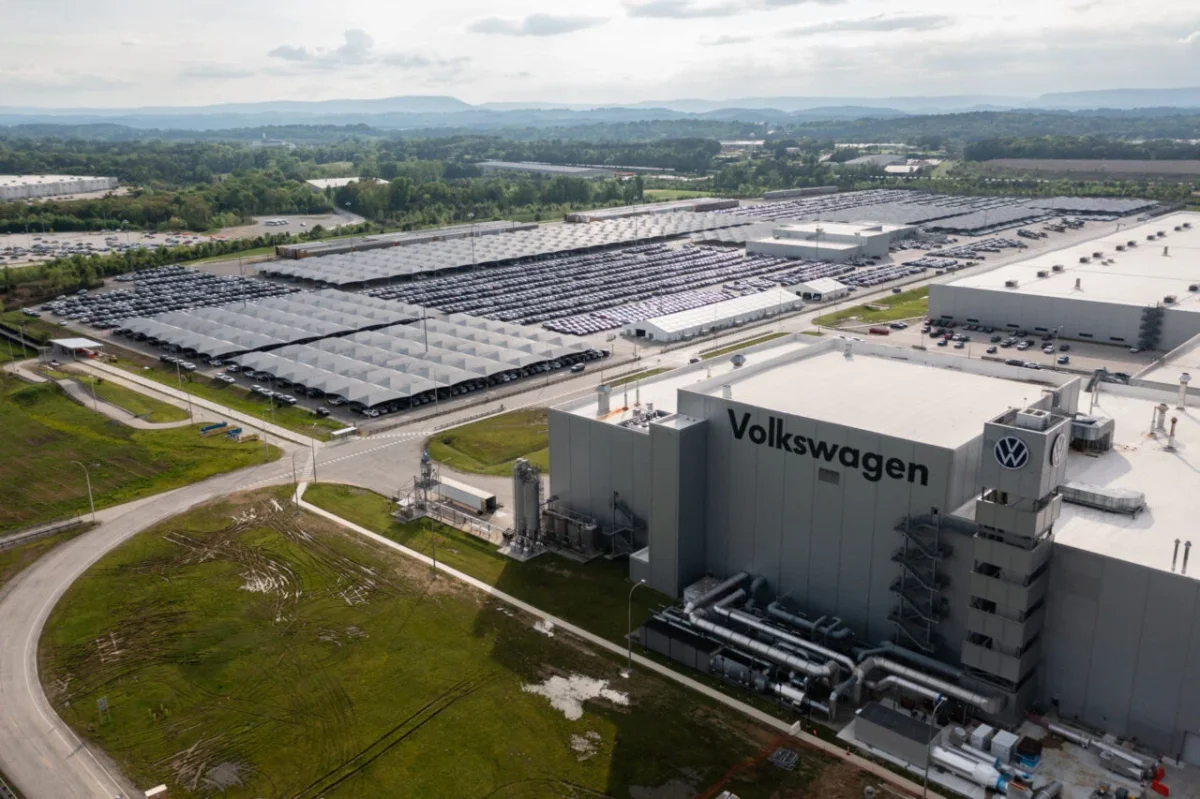

Volkswagen's Tennessee Plant Halts EV Production, Raising Concerns Amid Market Shift

Volkswagen's Tennessee Plant Halts EV Production, Raising Concerns Amid Market Shift

Volkswagen's Chattanooga plant will cease ID.4 electric SUV production in April, shifting to gasoline Atlas models, which consume five times more energy, raising concerns for EV advocates.

NeboAI I summarize the news with data, figures and context
IN 30 SECONDS

IN 1 SENTENCE

SENTIMENT
Neutral

𒀭
NeboAI is working, please wait...
Preparing detailed analysis
Quick summary completed
Extracting data, figures and quotes...
Identifying key players and context
DETAILED ANALYSIS
SHARE

NeboAI produces automated editions of journalistic texts in the form of summaries and analyses. Its experimental results are based on artificial intelligence. As an AI edition, texts may occasionally contain errors, omissions, incorrect data relationships and other unforeseen inaccuracies. We recommend verifying the content.

Volkswagen has announced a significant shift in its U.S. operations, halting production of the fully electric SUV, the ID.4, at its Chattanooga, Tennessee assembly plant by mid-April. Instead, the company will redirect its resources to manufacture the new generation of Atlas models, which are popular gasoline-powered SUVs, starting this summer and expected to hit dealerships by fall.

While the ID.4 will continue to be available until current inventory is depleted—projected to last until 2027—Volkswagen's decision comes amid ongoing challenges in the electric vehicle market. Environmental advocates are likely to be dismayed, as the Atlas models consume approximately five times more energy than the ID.4, which raises concerns over fuel economy standards.

Despite the pause in ID.4 production in the U.S., Volkswagen is still set to continue manufacturing the model in China and the EU, and is reportedly planning a future iteration of the ID.4 for North America. This strategic change reflects the broader struggles of the electric vehicle industry in the U.S., particularly following the reduction of the $7,500 electric vehicle tax credit implemented last year.

Want to read the full article? Access the original article with all the details.
Read Original Article
TL;DR

This article is an original summary for informational purposes. Image credits and full coverage at the original source. · View Content Policy

Editorial
Editorial Staff

Our editorial team works around the clock to bring you the latest tech news, trends, and insights from the industry. We cover everything from artificial intelligence breakthroughs to startup funding rounds, gadget launches, and cybersecurity threats. Our mission is to keep you informed with accurate, timely, and relevant technology coverage.

Press Enter to search or ESC to close