
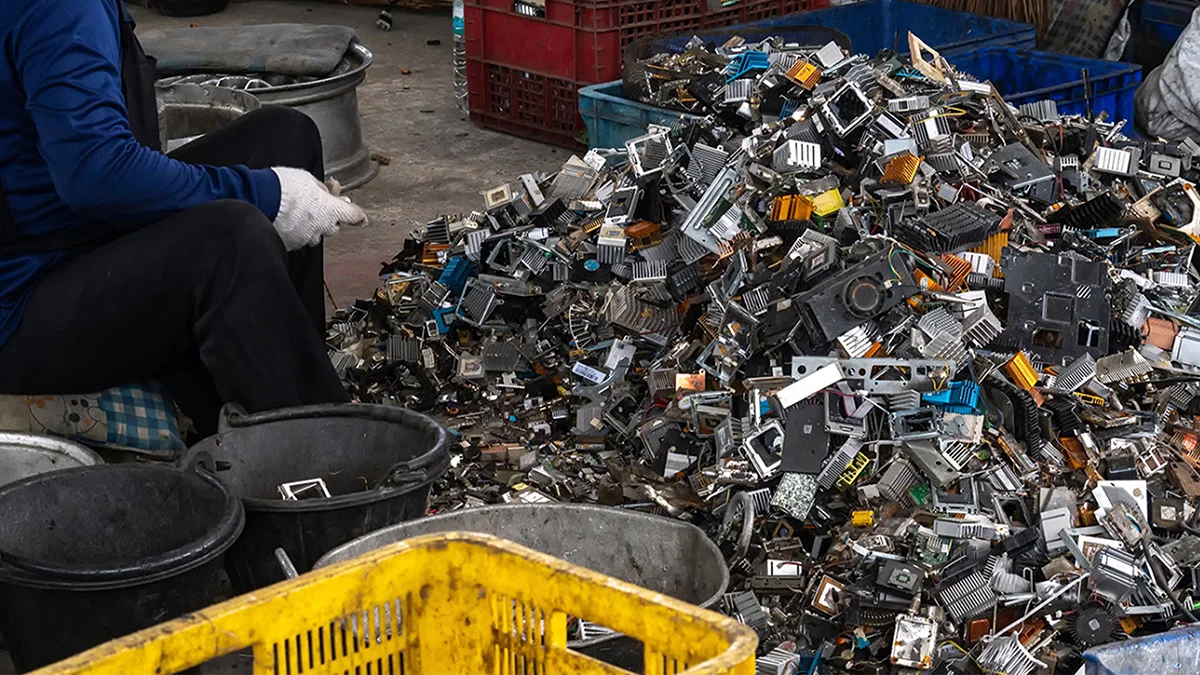

Electronic waste is rapidly becoming a major environmental concern, with the U.S. Environmental Protection Agency identifying it as one of the fastest-growing problems globally. In response, the University of Utah startup EnduraCure is innovating sustainable solutions by developing high-performance polymer substrates that can be chemically degraded, aiding in the recovery of valuable metals from electronic devices.
With a focus on flexible electronic substrates and encapsulants, EnduraCure aims to tackle the challenges of waste disposal in electronics, which often results in toxic materials like lead and mercury contaminating landfills. The company employs a photocured polymerization process, allowing their materials to maintain durability during use while being easily broken down in a mild chemical bath at end-of-life, facilitating the recovery of precious components.
CEO Dennis Pruzan, a former graduate student in engineering, emphasizes the importance of designing products to be degradable. This initiative aligns with efforts from the National Science Foundation to promote the development of reusable materials, contributing to a circular economy and reducing landfill burdens. EnduraCure originated from the Wang Research Group at the Price College of Engineering, which focuses on sustainable polymer research under the guidance of Chen Wang.