

UK’s fusion rocket test sparks potential revolution in space travel technology

UK’s fusion rocket test sparks potential revolution in space travel technology

British scientists achieved plasma ignition in a nuclear fusion rocket engine, potentially allowing Mars trips to reduce from months to weeks, revolutionizing space travel efficiency.

NeboAI I summarize the news with data, figures and context
IN 30 SECONDS

IN 1 SENTENCE

SENTIMENT
Neutral

𒀭
NeboAI is working, please wait...
Preparing detailed analysis
Quick summary completed
Extracting data, figures and quotes...
Identifying key players and context
DETAILED ANALYSIS
SHARE

NeboAI produces automated editions of journalistic texts in the form of summaries and analyses. Its experimental results are based on artificial intelligence. As an AI edition, texts may occasionally contain errors, omissions, incorrect data relationships and other unforeseen inaccuracies. We recommend verifying the content.

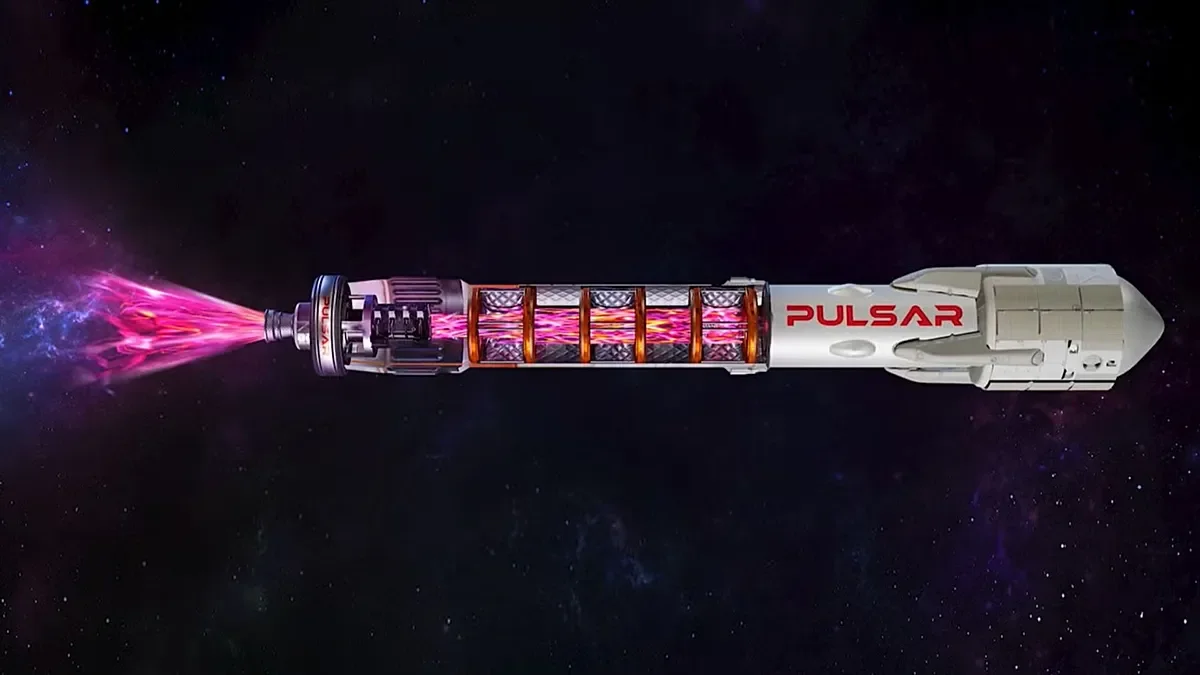
A significant advancement in nuclear fusion technology has been made by British scientists, marking a pivotal moment for future space travel. During Amazon's MARS Conference in California, Pulsar Fusion announced the successful ignition of plasma within a prototype fusion rocket engine known as the Sunbird fusion exhaust system.

This breakthrough was shared via a live stream, with CEO Richard Dinan highlighting the achievement as an "exceptional moment" for the company. The test, conducted at their Bletchley headquarters, involved creating plasma, a high-energy state of matter, using electric and magnetic fields. This demonstration is an early step toward developing a fusion-powered spacecraft engine.

Nuclear fusion, a process that merges light atomic nuclei to release vast energy, could revolutionize propulsion technology. If realized, fusion engines might generate up to 1,000 times the thrust of current rocket systems, enabling spacecraft to travel at speeds of approximately 800,000 kilometres per hour (500,000 mph). Such speeds could drastically reduce mission durations to Mars, potentially cutting travel time from months to mere weeks, thereby enhancing mission feasibility and safety for astronauts.

Want to read the full article? Access the original article with all the details.
Read Original Article
TL;DR

This article is an original summary for informational purposes. Image credits and full coverage at the original source. · View Content Policy

Editorial
Editorial Staff

Our editorial team works around the clock to bring you the latest tech news, trends, and insights from the industry. We cover everything from artificial intelligence breakthroughs to startup funding rounds, gadget launches, and cybersecurity threats. Our mission is to keep you informed with accurate, timely, and relevant technology coverage.

Press Enter to search or ESC to close