

Nvidia's $20B deal with Groq reshapes AI chip landscape, intensifying competition

Nvidia's $20B deal with Groq reshapes AI chip landscape, intensifying competition

Nvidia to invest $20 billion in Groq for AI technology licensing, gaining access to talent and a chip that uses ten times less power than standard graphics cards.

NeboAI I summarize the news with data, figures and context
IN 30 SECONDS

IN 1 SENTENCE

SENTIMENT
Neutral

𒀭
NeboAI is working, please wait...
Preparing detailed analysis
Quick summary completed
Extracting data, figures and quotes...
Identifying key players and context
DETAILED ANALYSIS
SHARE

NeboAI produces automated editions of journalistic texts in the form of summaries and analyses. Its experimental results are based on artificial intelligence. As an AI edition, texts may occasionally contain errors, omissions, incorrect data relationships and other unforeseen inaccuracies. We recommend verifying the content.

Nvidia Corp. has entered into a significant licensing agreement with artificial intelligence chip startup Groq Inc., reportedly valued at $20 billion. This deal will also see Nvidia hire key personnel from Groq, including its CEO Jonathan Ross and president Sunny Madra. The agreement enables Nvidia to utilize Groq’s inference technology without fully acquiring the company, a strategy often referred to as a reverse acquihire.

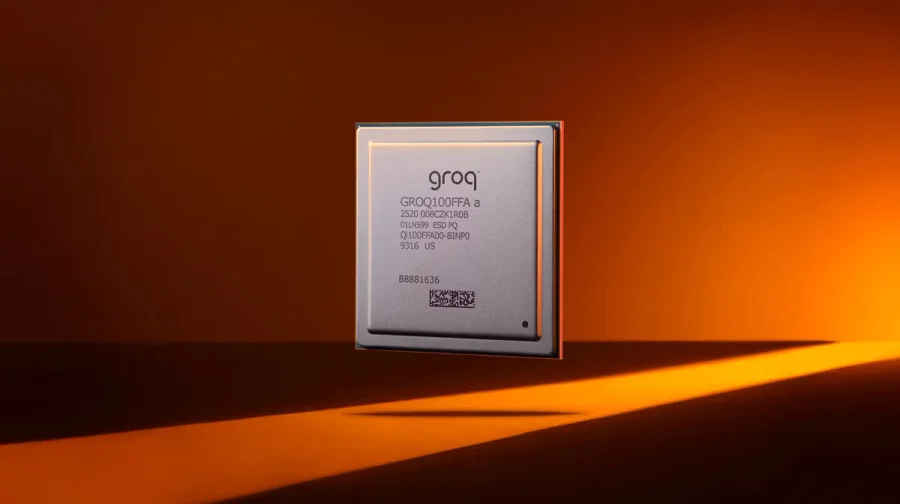
The transaction amount reflects a substantial premium of $13.1 billion over Groq's valuation as of September. The licensing arrangement includes access to Groq’s flagship product, the LPU inference chip, known for its energy efficiency, reportedly using ten times less power than traditional graphics cards. Groq's LPU features a deterministic design, enhancing precision in timing calculations and reducing processing delays commonly seen in nondeterministic chips.

Additionally, Groq's technology incorporates a high-performance memory system, with hundreds of megabytes of on-chip SRAM, which outperforms HBM memory used in graphics cards. The company also utilizes its proprietary RealScale interconnect to form inference clusters, addressing synchronization challenges in AI server coordination.

Want to read the full article? Access the original article with all the details.
Read Original Article
TL;DR

This article is an original summary for informational purposes. Image credits and full coverage at the original source. · View Content Policy

Editorial
Editorial Staff

Our editorial team works around the clock to bring you the latest tech news, trends, and insights from the industry. We cover everything from artificial intelligence breakthroughs to startup funding rounds, gadget launches, and cybersecurity threats. Our mission is to keep you informed with accurate, timely, and relevant technology coverage.

Press Enter to search or ESC to close