
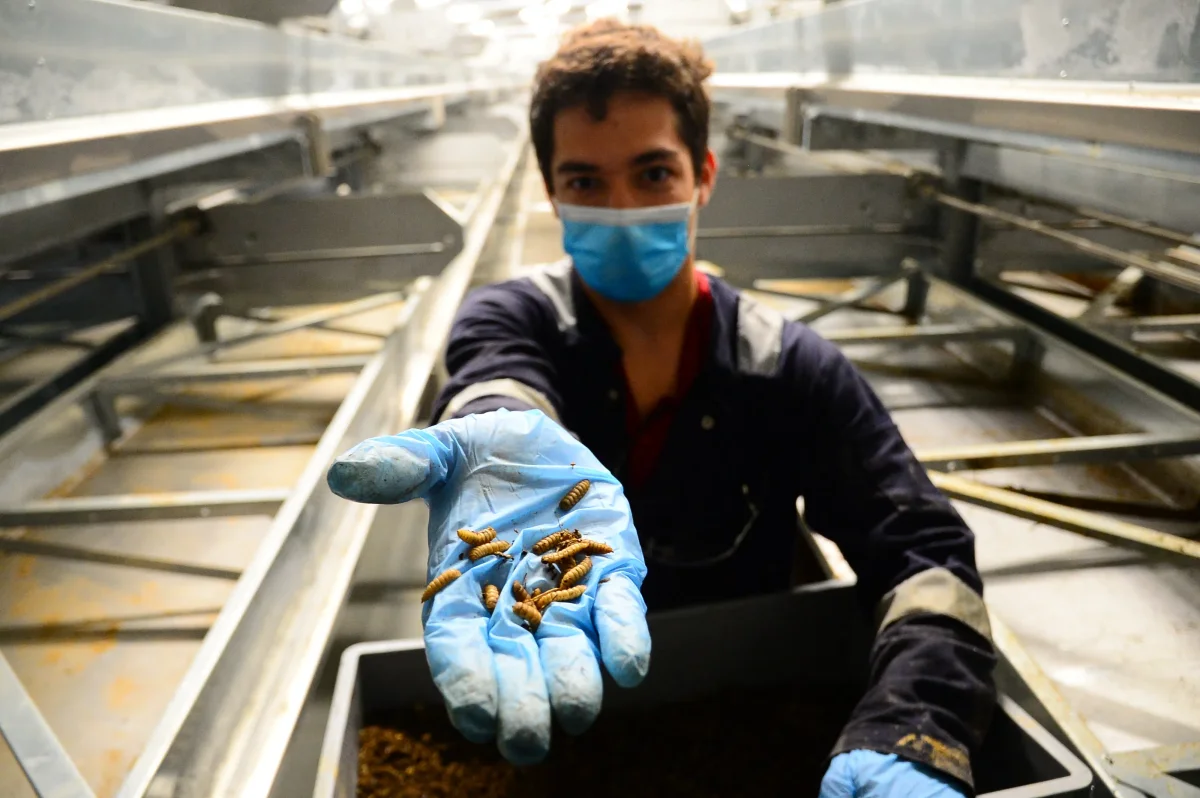

The insect farming industry, once viewed as a promising solution for sustainable food production, is now facing significant challenges. A decade ago, the sector attracted approximately $2 billion in investments from both governments and venture capitalists, driven by the belief that insects could provide an eco-friendly alternative to traditional livestock.
However, consumer resistance to eating bugs and the high production costs have led many startups to shut down. Companies like Protifly, based in France, are struggling to find a viable market for their products. The initial excitement surrounding insects as a food source has dwindled, pushing the industry towards more niche applications, such as pet food and livestock feed additives.
Although the United Nations previously promoted the potential of insects for both human and animal consumption, the reality now indicates a substantial shift in focus. The bold visions of insect-based meals, once imagined in TED talks and reports, are being reconsidered as the industry confronts its grim financial landscape.