
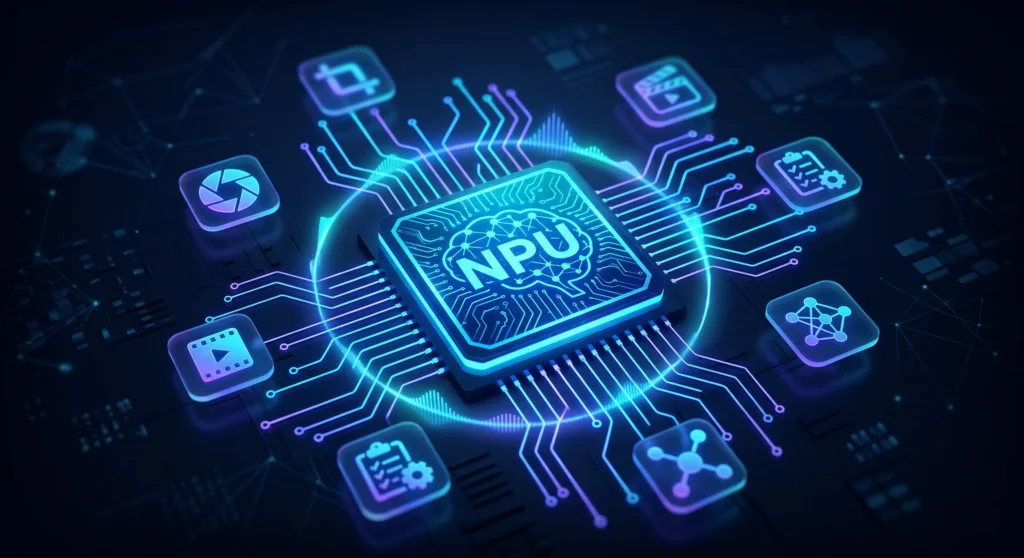

Unlocking AI Power: Seven Essential Windows Apps Utilizing NPU Technology

Unlocking AI Power: Seven Essential Windows Apps Utilizing NPU Technology

Microsoft's NPU integration in 2024 PCs is set to redefine user experience, with expectations for widespread adoption by 2026, enhancing AI efficiency across diverse applications.

NeboAI I summarize the news with data, figures and context
IN 30 SECONDS

IN 1 SENTENCE

SENTIMENT
Neutral

𒀭
NeboAI is working, please wait...
Preparing detailed analysis
Quick summary completed
Extracting data, figures and quotes...
Identifying key players and context
DETAILED ANALYSIS
SHARE

NeboAI produces automated editions of journalistic texts in the form of summaries and analyses. Its experimental results are based on artificial intelligence. As an AI edition, texts may occasionally contain errors, omissions, incorrect data relationships and other unforeseen inaccuracies. We recommend verifying the content.

The integration of specialized hardware like the Neural Processing Unit (NPU) is transforming personal computing capabilities, with a significant push expected across many PCs by 2026. This technology, initially linked to Microsoft’s Copilot+ PCs, is set to enhance AI processing across various applications, moving beyond its origins with Qualcomm’s Snapdragon X chips to newer offerings from Intel and AMD.

Among the noteworthy applications leveraging the NPU is Cephable, which revolutionizes user interaction by allowing commands through adaptive controls such as eye movement and voice, while ensuring data privacy by processing information locally. In the realm of photo editing, Adobe Photoshop utilizes the NPU to improve efficiency in tasks like background removal and subject selection, which benefits users on less powerful devices.

Furthermore, Norton Antivirus has introduced AI features to enhance its capabilities against deepfakes and phishing attacks, all while keeping user data secure. Music software like Algoriddim’s djay Pro also capitalizes on the NPU for its Neural Mix feature, improving audio quality and responsiveness for users. These advancements signal a growing trend in AI applications directly benefiting from on-device processing power.

Want to read the full article? Access the original article with all the details.
Read Original Article
TL;DR

This article is an original summary for informational purposes. Image credits and full coverage at the original source. · View Content Policy

Editorial
Editorial Staff

Our editorial team works around the clock to bring you the latest tech news, trends, and insights from the industry. We cover everything from artificial intelligence breakthroughs to startup funding rounds, gadget launches, and cybersecurity threats. Our mission is to keep you informed with accurate, timely, and relevant technology coverage.

Press Enter to search or ESC to close