
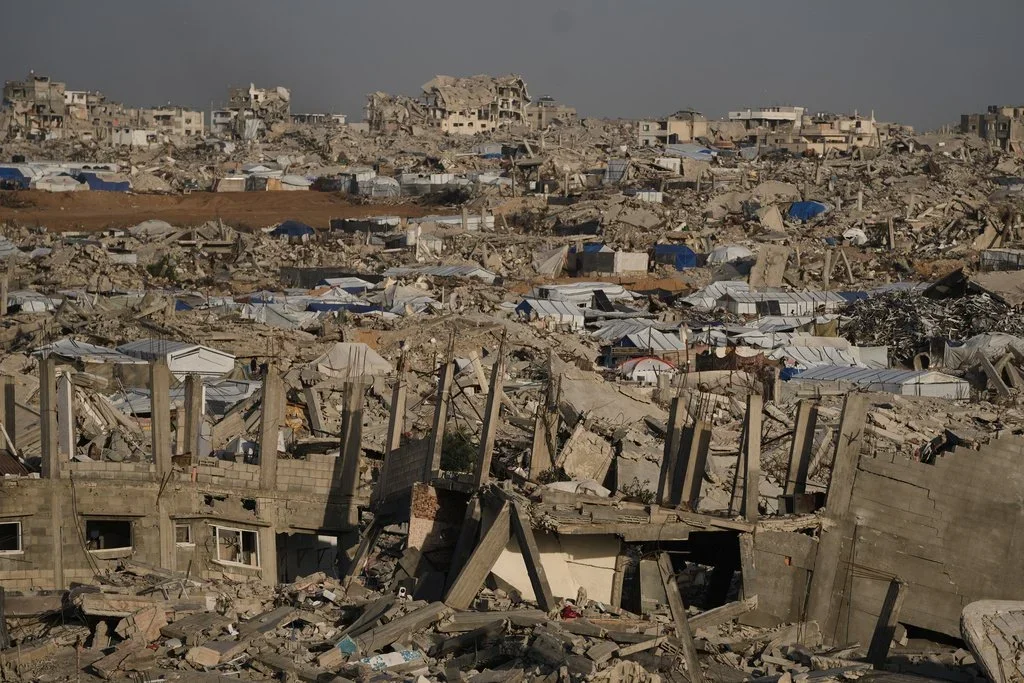

UN Leverages Satellite Technology to Transform Humanitarian Aid in Gaza Crisis

UN Leverages Satellite Technology to Transform Humanitarian Aid in Gaza Crisis

The Israeli military's October 2023 siege on Gaza has caused 9,000 deaths and displaced 70%, emphasizing the critical role of AI in disaster mapping and crisis response.

NeboAI I summarize the news with data, figures and context
IN 30 SECONDS

IN 1 SENTENCE

SENTIMENT
Neutral

𒀭
NeboAI is working, please wait...
Preparing detailed analysis
Quick summary completed
Extracting data, figures and quotes...
Identifying key players and context
DETAILED ANALYSIS
SHARE

NeboAI produces automated editions of journalistic texts in the form of summaries and analyses. Its experimental results are based on artificial intelligence. As an AI edition, texts may occasionally contain errors, omissions, incorrect data relationships and other unforeseen inaccuracies. We recommend verifying the content.

As of October 9, 2023, the Israeli military has enacted a “complete siege” on the Gaza Strip, leading to severe humanitarian challenges. The siege has compromised access to vital resources such as food, electricity, and fuel, resulting in the collapse of critical infrastructure, including hospitals and communication networks. The ongoing conflict has caused approximately 9,000 fatalities, with a majority attributed to airstrikes, hunger, and disease, and left 25,000 individuals injured while displacing 70% of the population.

In light of these conditions, the need for improved disaster mapping has become increasingly urgent. Advanced AI capabilities, particularly through machine-learning models that analyze satellite imagery, are being employed by organizations like the United Nations Satellite Centre (UNOSAT) to identify areas in need of reconstruction and to develop actionable plans. This technology has enabled humanitarian groups to effectively track infrastructure damage and civilian displacement.

Since its inception in April 2017, Project Maven has evolved into a crucial part of the Pentagon's efforts in integrating AI into military operations, while also influencing over 800 AI projects across various agencies, including the CIA. Humanitarian organizations are increasingly leveraging AI solutions to enhance crisis management, although ethical concerns surrounding these technologies remain a significant issue that needs to be addressed.

Want to read the full article? Access the original article with all the details.
Read Original Article
TL;DR

This article is an original summary for informational purposes. Image credits and full coverage at the original source. · View Content Policy

Editorial
Editorial Staff

Our editorial team works around the clock to bring you the latest tech news, trends, and insights from the industry. We cover everything from artificial intelligence breakthroughs to startup funding rounds, gadget launches, and cybersecurity threats. Our mission is to keep you informed with accurate, timely, and relevant technology coverage.

Press Enter to search or ESC to close