
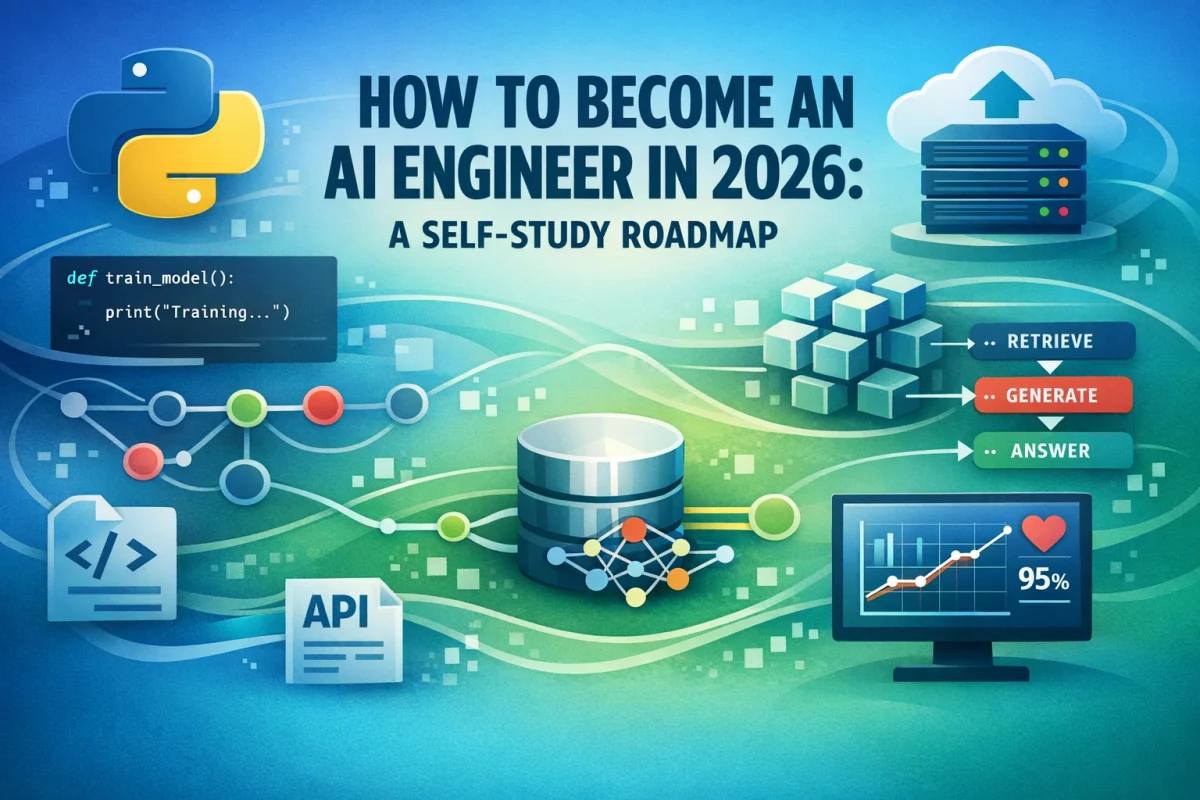

Professionals Gear Up for 2026 AI Engineering Mastery with Essential Self-Study Guide

Professionals Gear Up for 2026 AI Engineering Mastery with Essential Self-Study Guide

The AI sector is experiencing a 30% increase in demand for skilled engineers, necessitating expertise in Python, software engineering, and LLMs to tackle real-world challenges.

NeboAI I summarize the news with data, figures and context
IN 30 SECONDS

IN 1 SENTENCE

SENTIMENT
Neutral

𒀭
NeboAI is working, please wait...
Preparing detailed analysis
Quick summary completed
Extracting data, figures and quotes...
Identifying key players and context
DETAILED ANALYSIS
SHARE

NeboAI produces automated editions of journalistic texts in the form of summaries and analyses. Its experimental results are based on artificial intelligence. As an AI edition, texts may occasionally contain errors, omissions, incorrect data relationships and other unforeseen inaccuracies. We recommend verifying the content.

The increasing necessity for skilled AI engineers is evident as industries undergo significant transformations due to artificial intelligence. These engineers are tasked with developing practical applications that utilize existing AI models, including chatbots and intelligent workflows designed to solve real-world issues. As the field continues to evolve, a structured learning approach is essential for those aspiring to enter this profession.

To begin their journey, potential AI engineers should focus on mastering programming fundamentals, with Python being the preferred language because of its versatility and extensive libraries. Engaging with resources like “Python for Everybody” can establish a solid foundation, generally requiring two to three months of dedicated effort. After grasping programming basics, learners must advance to software engineering principles, which include understanding web architecture, API design, and database management.

Once equipped with these skills, aspiring engineers should delve into the fundamentals of AI and large language models (LLMs), emphasizing concepts like tokenization and context management. Practical applications such as building chatbots or text summarizers can enhance their learning experience. The exploration of retrieval-augmented generation (RAG) systems marks a pivotal step in their development, allowing models to effectively reference specific documents and databases.

Want to read the full article? Access the original article with all the details.
Read Original Article
TL;DR

This article is an original summary for informational purposes. Image credits and full coverage at the original source. · View Content Policy

Editorial
Editorial Staff

Our editorial team works around the clock to bring you the latest tech news, trends, and insights from the industry. We cover everything from artificial intelligence breakthroughs to startup funding rounds, gadget launches, and cybersecurity threats. Our mission is to keep you informed with accurate, timely, and relevant technology coverage.

Press Enter to search or ESC to close