

Microsoft's New Maia 200 AI Chip Sets Stage for Competitive Edge in AI Development

Microsoft's New Maia 200 AI Chip Sets Stage for Competitive Edge in AI Development

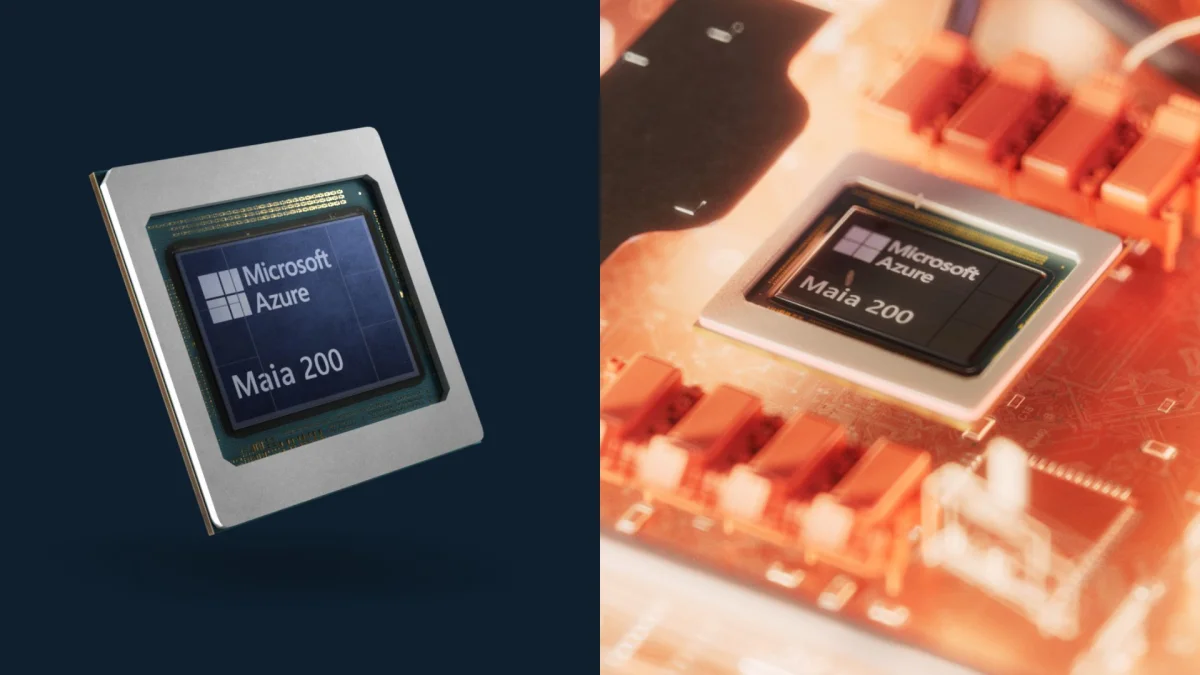
Microsoft's Maia 200 AI chip, launching in Iowa, features over 100 billion transistors and 10 petaflops of compute power, promising to enhance AI service delivery amid rising inference costs.

NeboAI I summarize the news with data, figures and context
IN 30 SECONDS

IN 1 SENTENCE

SENTIMENT
Neutral

𒀭
NeboAI is working, please wait...
Preparing detailed analysis
Quick summary completed
Extracting data, figures and quotes...
Identifying key players and context
DETAILED ANALYSIS
SHARE

NeboAI produces automated editions of journalistic texts in the form of summaries and analyses. Its experimental results are based on artificial intelligence. As an AI edition, texts may occasionally contain errors, omissions, incorrect data relationships and other unforeseen inaccuracies. We recommend verifying the content.

Microsoft's new AI chip, the Maia 200, is set to launch this week in a data center located in Iowa, aiming to enhance the performance of AI services amid rising costs associated with inference. This second-generation chip is specifically designed for delivering AI responses, shifting the focus from previous models that primarily targeted training. The launch responds to the increasing demand for efficiency as AI chatbots and digital assistants grow in popularity.

Building on the earlier Maia 100, the Maia 200 boasts over 100 billion transistors and can achieve more than 10 petaflops of computing power at 4-bit precision, with approximately 5 petaflops at 8-bit precision. These specifications are crafted for real-world applications, emphasizing speed and energy efficiency, which are crucial for handling modern AI workloads.

Additionally, a second deployment of the chip is planned for Arizona. As Microsoft aims to lessen its dependence on NVIDIA's hardware, the Maia 200 positions the company competitively against other cloud providers like Google and Amazon Web Services, who have introduced their own AI chips. The design prioritizes rapid response times, particularly during high user traffic, aligning with current trends in AI hardware development.

Want to read the full article? Access the original article with all the details.
Read Original Article
TL;DR

This article is an original summary for informational purposes. Image credits and full coverage at the original source. · View Content Policy

Editorial
Editorial Staff

Our editorial team works around the clock to bring you the latest tech news, trends, and insights from the industry. We cover everything from artificial intelligence breakthroughs to startup funding rounds, gadget launches, and cybersecurity threats. Our mission is to keep you informed with accurate, timely, and relevant technology coverage.

Press Enter to search or ESC to close