
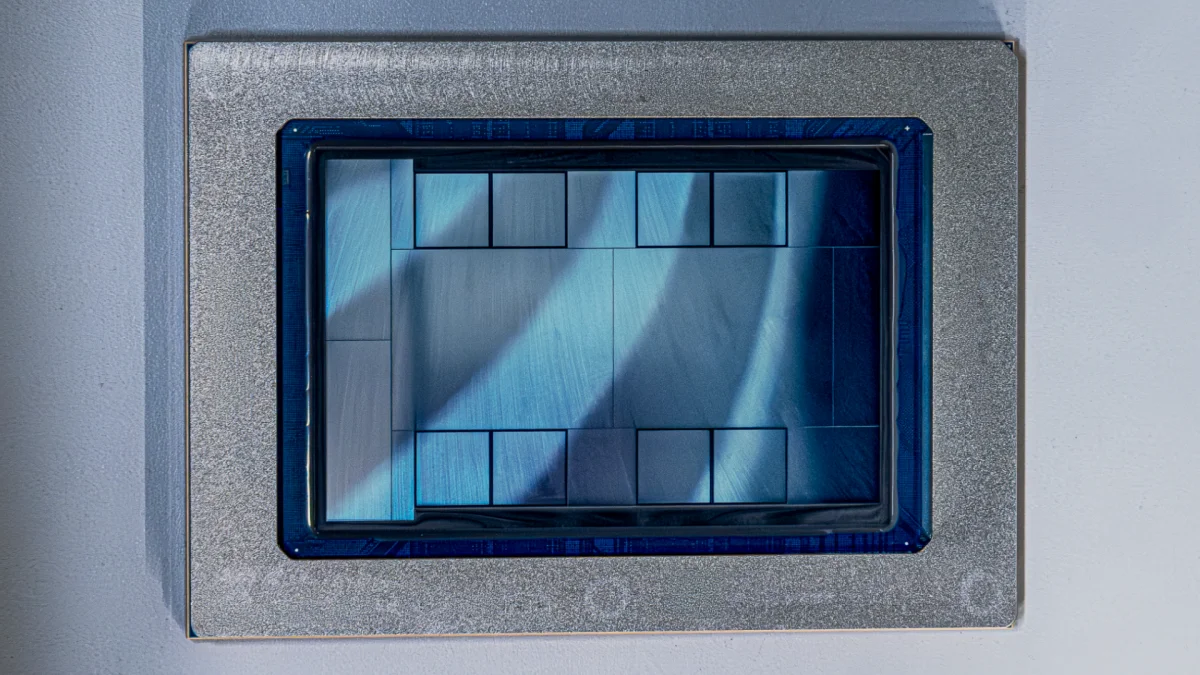

Meta's New MTIA Chips Set to Transform AI Inference with Unprecedented Speed Boost

Meta's New MTIA Chips Set to Transform AI Inference with Unprecedented Speed Boost

Meta's new MTIA chips promise a 25x compute boost and advanced HBM bandwidth, with the MTIA 500 set to achieve up to 30 PFLOPS by late 2027. Discover how this reshapes AI performance.

NeboAI I summarize the news with data, figures and context
IN 30 SECONDS

IN 1 SENTENCE

SENTIMENT
Neutral

𒀭
NeboAI is working, please wait...
Preparing detailed analysis
Quick summary completed
Extracting data, figures and quotes...
Identifying key players and context
DETAILED ANALYSIS
SHARE

NeboAI produces automated editions of journalistic texts in the form of summaries and analyses. Its experimental results are based on artificial intelligence. As an AI edition, texts may occasionally contain errors, omissions, incorrect data relationships and other unforeseen inaccuracies. We recommend verifying the content.

Meta is set to enhance its artificial intelligence capabilities with the introduction of four new chip generations, namely the MTIA 300, MTIA 400, MTIA 450, and MTIA 500, developed in collaboration with Broadcom. The deployment of these chips is planned over the next two years, reflecting a strategic shift towards improving AI performance through rapid development cycles.

The MTIA 300 is currently in production and focuses on ranking and recommendations, while the MTIA 400 is progressing through lab tests before being deployed in data centers. Anticipated for mass deployment in early and late 2027, the MTIA 450 and 500 are tailored for AI inference, boasting significant advancements in performance metrics. For example, the MTIA 500 is expected to achieve up to 30 PFLOPS of peak performance and a substantial increase in HBM bandwidth.

Meta highlights that the MTIA 450 doubles the HBM bandwidth of the MTIA 400, improving performance against leading commercial products such as Nvidia’s H100 and H200. Innovations include hardware acceleration for specific tasks and custom data types optimized for inference, which are set to address the current limitations in mainstream GPU capabilities.

Want to read the full article? Access the original article with all the details.
Read Original Article
TL;DR

This article is an original summary for informational purposes. Image credits and full coverage at the original source. · View Content Policy

Editorial
Editorial Staff

Our editorial team works around the clock to bring you the latest tech news, trends, and insights from the industry. We cover everything from artificial intelligence breakthroughs to startup funding rounds, gadget launches, and cybersecurity threats. Our mission is to keep you informed with accurate, timely, and relevant technology coverage.

Press Enter to search or ESC to close