
AI Innovations Propel Biothreat Detection Systems Market to $3.49B Growth Surge

AI Innovations Propel Biothreat Detection Systems Market to $3.49B Growth Surge

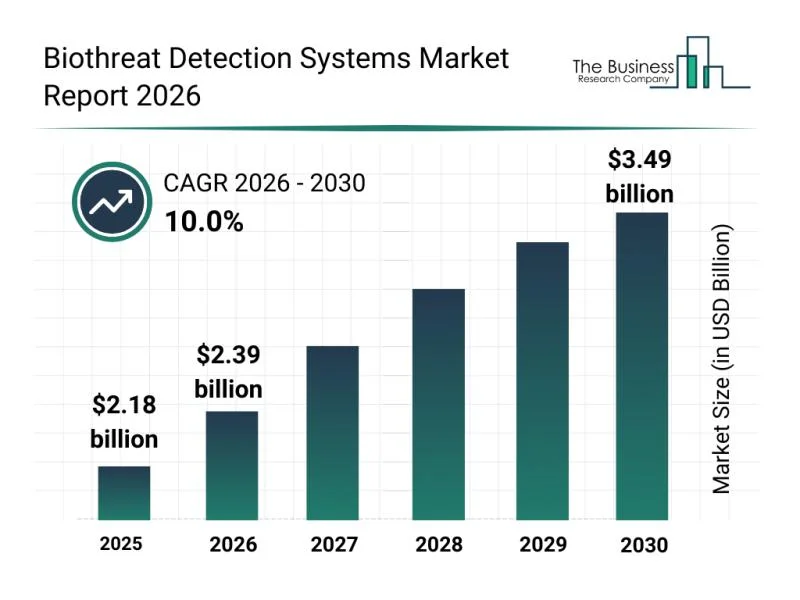
The biothreat detection systems market is set to hit $3.49 billion by 2030, fueled by AI advancements and urgent needs for biological threat surveillance. Discover key industry shifts.

NeboAI I summarize the news with data, figures and context
IN 30 SECONDS

IN 1 SENTENCE

SENTIMENT
Neutral

𒀭
NeboAI is working, please wait...
Preparing detailed analysis
Quick summary completed
Extracting data, figures and quotes...
Identifying key players and context
DETAILED ANALYSIS
SHARE

NeboAI produces automated editions of journalistic texts in the form of summaries and analyses. Its experimental results are based on artificial intelligence. As an AI edition, texts may occasionally contain errors, omissions, incorrect data relationships and other unforeseen inaccuracies. We recommend verifying the content.

The global market for biothreat detection systems is expected to grow significantly, reaching a value of $3.49 billion by 2030. This expansion reflects a compound annual growth rate (CAGR) of 10.0% as technological advancements and rising security concerns drive demand. The urgency to detect biological threats is prompting governments and private entities to enhance their surveillance capabilities.

Key players in this sector include notable companies like Roche Diagnostics AG, Thermo Fisher Scientific Inc., and Abbott Laboratories. Recent industry shifts, such as the acquisition of Protect AI by Palo Alto Networks Inc. in July 2026, highlight the competitive landscape and the focus on artificial intelligence in threat detection. Innovations such as real-time aerosol-based pathogen monitoring systems are emerging, aimed at improving continuous biological surveillance.

In a recent initiative, BioFlyte Inc. launched a pilot program at Pittsburgh International Airport in August 2023, deploying autonomous air-sampling units for rapid identification of airborne biological threats. These developments reflect a broader trend towards integrating advanced technologies for public health and safety applications across various sectors.

Want to read the full article? Access the original article with all the details.
Read Original Article
TL;DR

This article is an original summary for informational purposes. Image credits and full coverage at the original source. · View Content Policy

Editorial
Editorial Staff

Our editorial team works around the clock to bring you the latest tech news, trends, and insights from the industry. We cover everything from artificial intelligence breakthroughs to startup funding rounds, gadget launches, and cybersecurity threats. Our mission is to keep you informed with accurate, timely, and relevant technology coverage.

Press Enter to search or ESC to close