
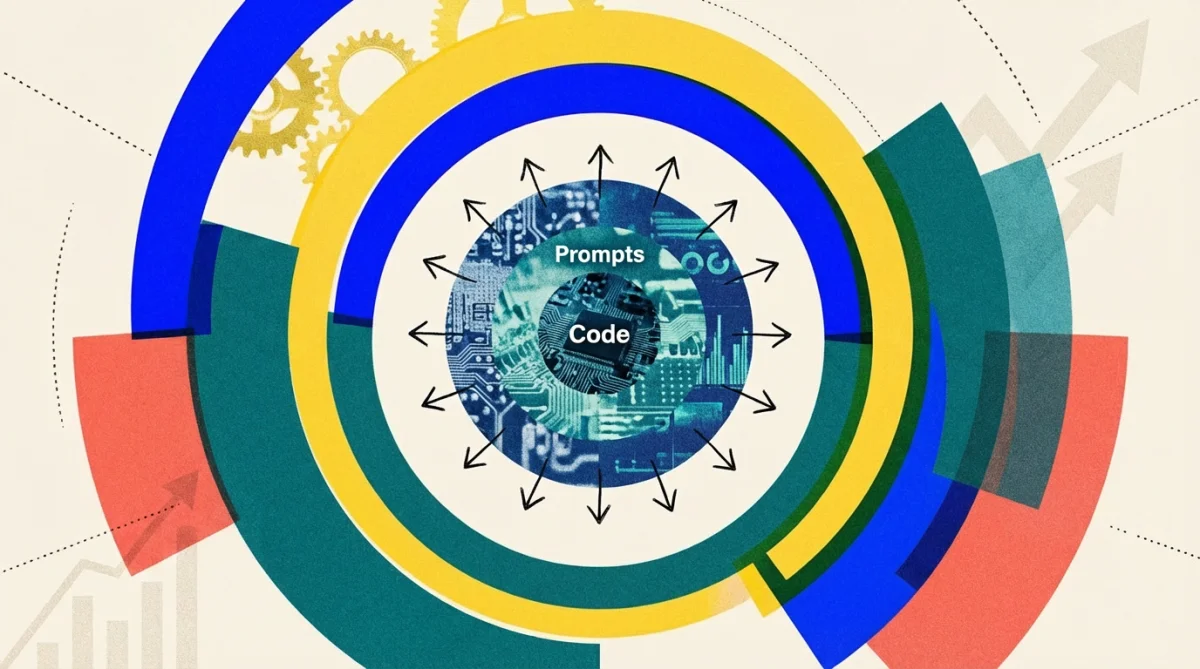

A recent study conducted by researchers from Chalmers University of Technology and the Volvo Group reveals that artificial intelligence (AI) is not making software developers obsolete, but rather transforming software engineering practices. The research introduces the concept of “semi-executable artifacts,” which encompass various elements such as workflows, prompts, and escalation rules that influence system behavior, relying on human interpretation for their execution.
The study centers on the “Semi-Executable Stack,” a model characterized by six concentric rings that represent different aspects of software engineering. The innermost ring is classic code, followed by natural language specifications and agent workflows, with the outer rings increasingly focusing on operational logic and social factors like the EU AI Act. This framework suggests that while traditional methods have prioritized the inner rings, attention is now shifting to the outer layers, especially rings five and six, which deal with decision-making and regulatory compliance.
Researchers noted a gap in existing engineering methodologies for these outer rings, suggesting that software engineers must adapt to the evolving demands of AI technologies. They emphasize that AI's effectiveness does not rely on outperforming top engineers, but rather on its competence and the scale of its deployment, which may yield significant organizational advantages.