
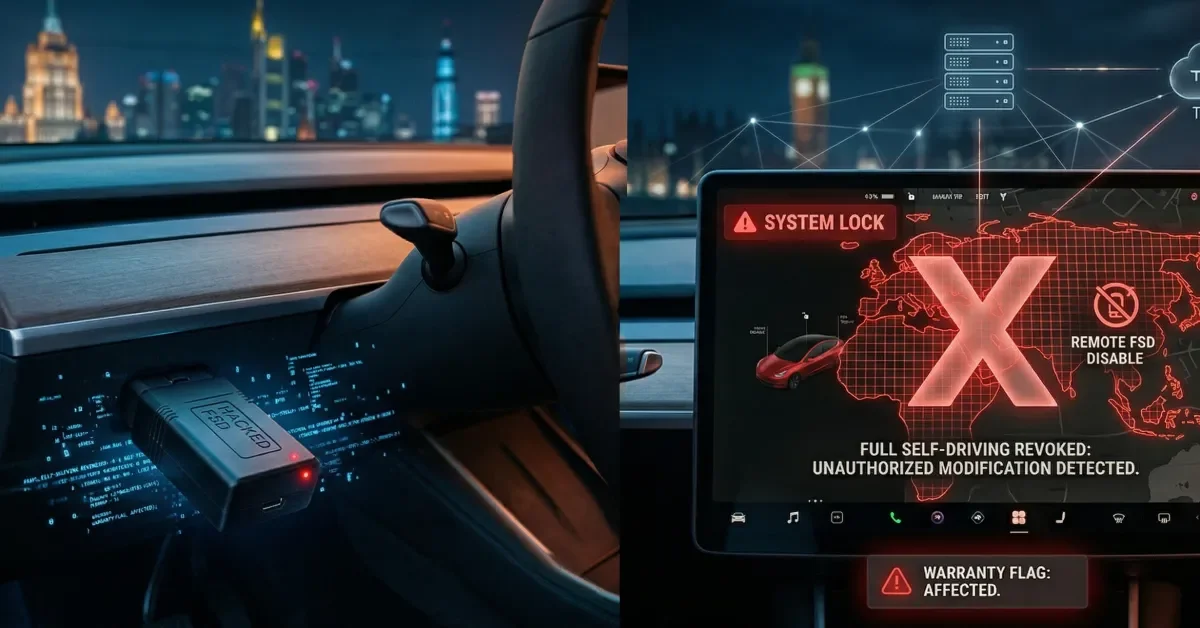

Tesla is taking significant action against unauthorized devices that enable Full Self-Driving (FSD) capabilities in regions without regulatory approval. The automaker has been remotely disabling FSD access for affected vehicles across Europe, South Korea, China, and Turkey, reverting them to basic Autopilot functionality.
These unauthorized devices, which are small USB-like modules priced around €500, connect to a Tesla’s Controller Area Network (CAN) bus, allowing users to bypass regional software restrictions. The issue gained traction after developer Michal Gapinski showcased a method for unlocking software-locked features through such devices, leading to a rise in similar products, particularly in Europe, where FSD approval has faced multiple delays.
As of now, Tesla has been monitoring vehicle logs for unauthorized modifications. Owners who used these devices in China have received notifications of permanent bans from FSD, even if they had previously purchased the feature. The company has also issued warnings to affected users, stating they bear full liability for any incidents that occur while using these unauthorized modifications and that warranty repairs may be denied.