
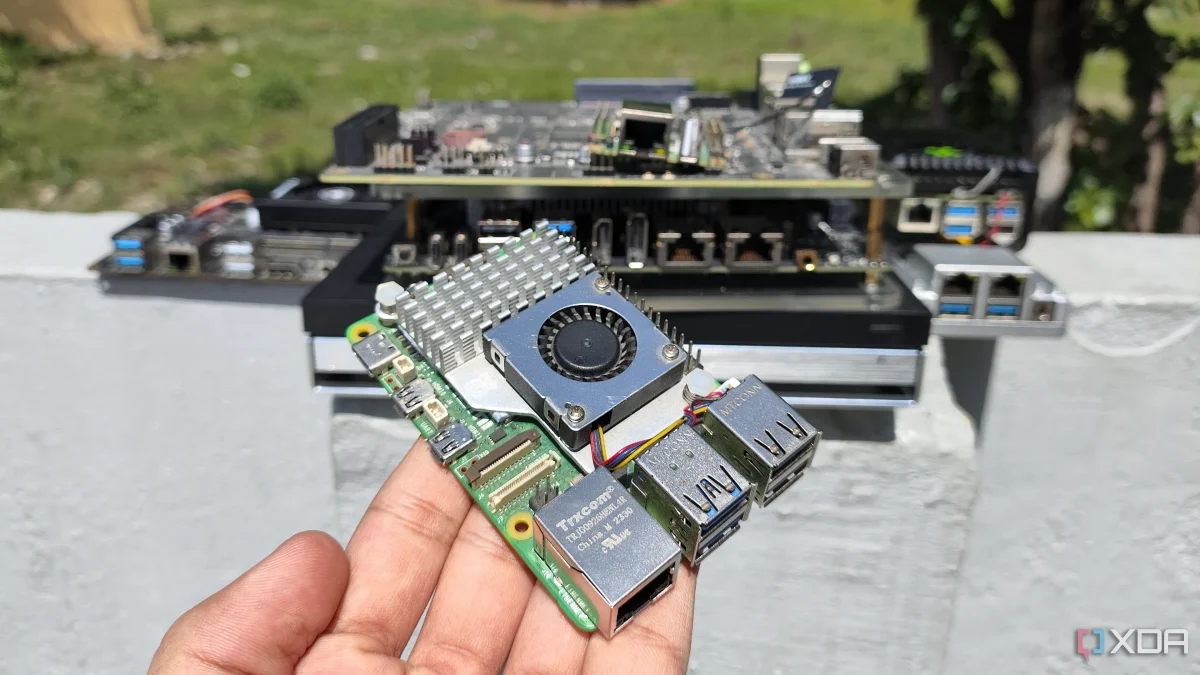

Upgrading to a solid-state drive (SSD) significantly enhances the reliability of a home server built around the Raspberry Pi 5. Transitioning from microSD cards to SSDs ensures greater endurance and consistent performance, crucial for handling demanding tasks such as database management and media libraries. Users often report that microSD cards fail unexpectedly, leading to system glitches and data corruption.
The Raspberry Pi 5 features direct PCIe bus access, allowing for connection to faster storage options like the official M.2 HAT+, which supports NVMe SSDs. This connectivity leads to improved read and write speeds compared to traditional USB storage solutions. Various third-party cases and 3D-printed designs are available to accommodate this upgrade.
Additionally, effective cooling is vital for maintaining the performance of the Raspberry Pi 5, as the increased power output generates more heat. Proper thermal management prevents performance throttling, ensuring that the board operates smoothly under load.
Using SSD storage not only improves the server's reliability but also offers users clearer insights into drive health, allowing for proactive maintenance before issues arise, unlike the unpredictable nature of microSD cards.