
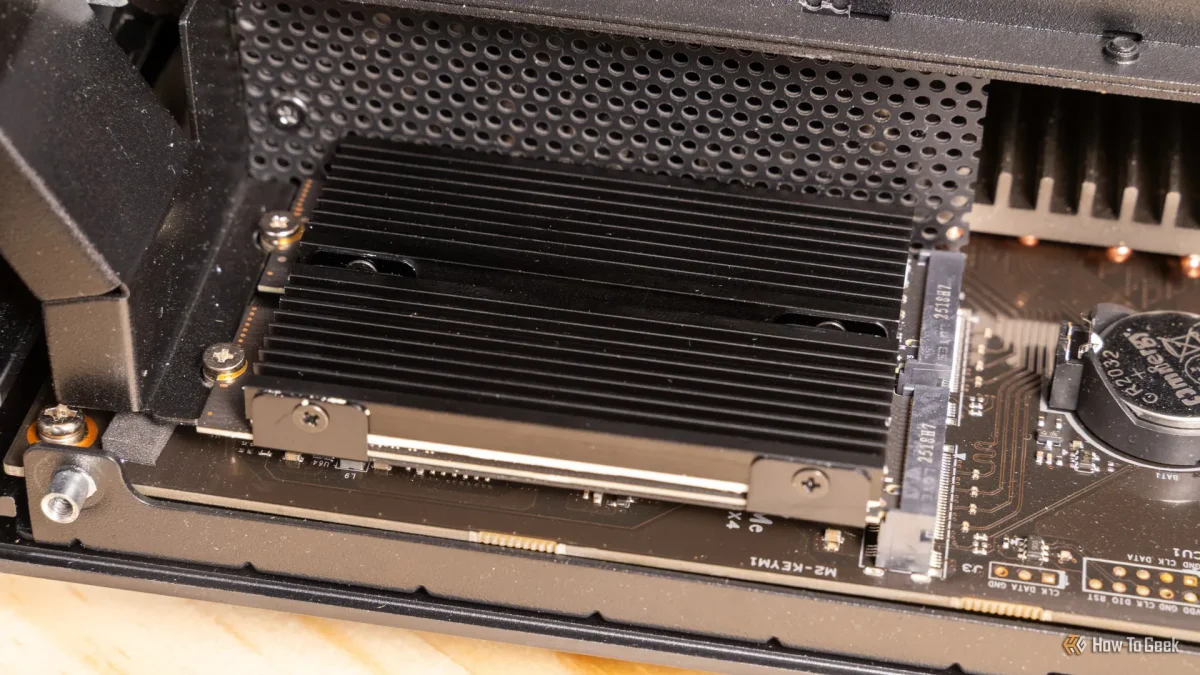

SSD Users Save Money by Avoiding Fans: Understanding the Active NVMe Cooling Trap

SSD Users Save Money by Avoiding Fans: Understanding the Active NVMe Cooling Trap

Modern PCIe Gen 4 and 5 NVMe SSDs can exceed 85°C during data transfers, risking lifespan. Effective cooling is crucial for reliability and performance longevity.

NeboAI I summarize the news with data, figures and context
IN 30 SECONDS

IN 1 SENTENCE

SENTIMENT
Neutral

𒀭
NeboAI is working, please wait...
Preparing detailed analysis
Quick summary completed
Extracting data, figures and quotes...
Identifying key players and context
DETAILED ANALYSIS
SHARE

NeboAI produces automated editions of journalistic texts in the form of summaries and analyses. Its experimental results are based on artificial intelligence. As an AI edition, texts may occasionally contain errors, omissions, incorrect data relationships and other unforeseen inaccuracies. We recommend verifying the content.

Heat management is critical for the performance and longevity of NVMe SSDs, especially under heavy data transfer conditions. Temperatures can surpass 85°C without proper cooling, leading to accelerated wear on components like the NVMe controller and NAND flash. This overheating risk remains even during regular use, particularly in systems where airflow is insufficient.

Modern motherboards typically come equipped with at least one NVMe heatsink, which is adequate for a single drive. For users with multiple drives or motherboards lacking heatsinks, options such as the Arctic M2 Pro provide cost-effective and efficient passive cooling solutions. This model is compatible with M.2 2280 NVMe SSDs and priced at $5 on Amazon.

While passive heatsinks can absorb heat, they depend on the system's airflow to dissipate it effectively. Active cooling solutions, like those incorporating small fans, enhance heat removal but may be considered excessive for typical consumer setups. Products such as the Thermalright HR10 2280 Pro are designed to tackle these challenges, offering significant cooling benefits for high-performance NVMe drives.

Want to read the full article? Access the original article with all the details.
Read Original Article
TL;DR

This article is an original summary for informational purposes. Image credits and full coverage at the original source. · View Content Policy

Editorial
Editorial Staff

Our editorial team works around the clock to bring you the latest tech news, trends, and insights from the industry. We cover everything from artificial intelligence breakthroughs to startup funding rounds, gadget launches, and cybersecurity threats. Our mission is to keep you informed with accurate, timely, and relevant technology coverage.

Press Enter to search or ESC to close