
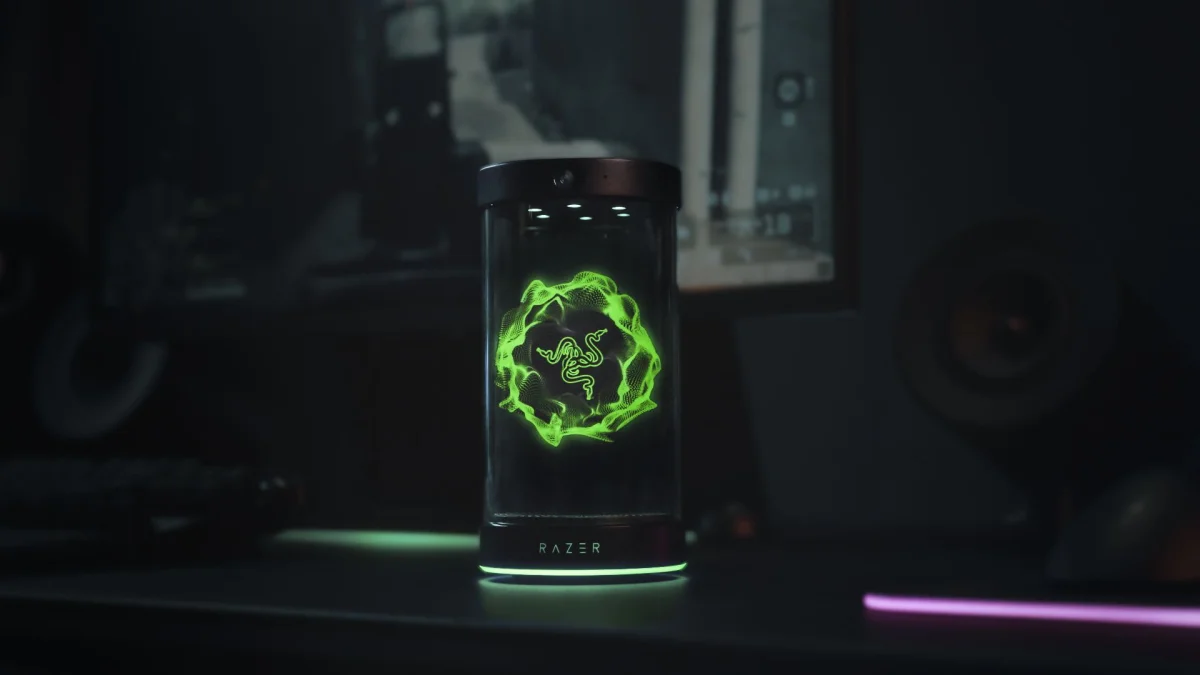

The recent unveiling of Razer's Project AVA at CES 2026 has sparked significant backlash online, with many dismissing it as a mere novelty. Critics have labeled the AI companion a "laughingstock," reflecting a broader skepticism towards AI technology. While some of the reactions may be justified, they overlook challenges that Project AVA faces in gaining mainstream acceptance.
Project AVA is designed as a desktop AI companion that enhances traditional smart assistants by incorporating a virtual body and face displayed on a 5.5-inch holographic screen. It features a camera for eye tracking and expression recognition, allowing it to provide personalized interactions while users engage in gaming or other activities. In addition to gaming support, it aims to assist with common tasks such as translation and organization.
The device includes various avatars, including representations of popular eSports figures and viral sensations. Despite its innovative approach, early reactions have included mockery and concerns about the implications of relying on an AI for companionship. Razer has a history of venturing beyond gaming hardware, yet Project AVA's reception suggests a complex path ahead for its acceptance.