
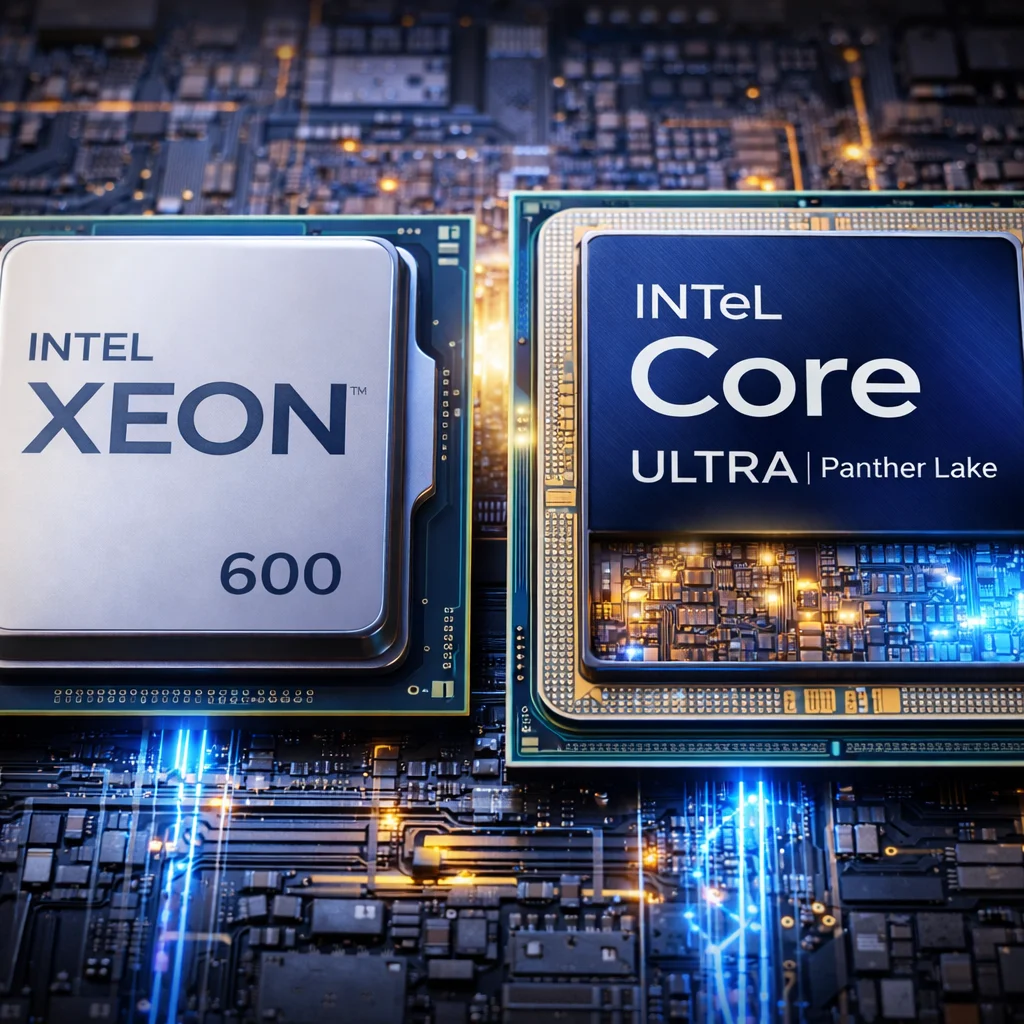

Intel's shift towards integrated AI acceleration signifies a pivotal change in its CPU strategy, moving AI from a secondary feature to a core expectation for both servers and client devices. The company has introduced the Xeon 600 processors, designed specifically for AI workloads, which feature advanced acceleration capabilities that enhance vector and matrix operations essential for inference tasks.
This new series will be part of Intel's roadmap for server technology, allowing conventional CPU tasks to coexist with AI functions without needing separate GPU accelerators. The upcoming Panther Lake architecture is set to further this initiative by incorporating a dedicated Neural Processing Unit (NPU), building on the foundations laid by previous architectures like Meteor Lake. This integration aims to optimize energy efficiency and system performance, particularly for notebooks where local AI applications are increasingly utilized.
Intel's commitment to "AI-first workloads" reflects a broader architectural shift, emphasizing the role of CPUs in managing AI inference, especially in lower performance ranges. As the boundaries between CPUs, GPUs, and other accelerators continue to blur, the company is strategically positioning itself to meet the growing demand for efficient, integrated AI solutions.